DMS Talks
Retail Innovation & Corp-Ups — Shaping the Future of Retail.
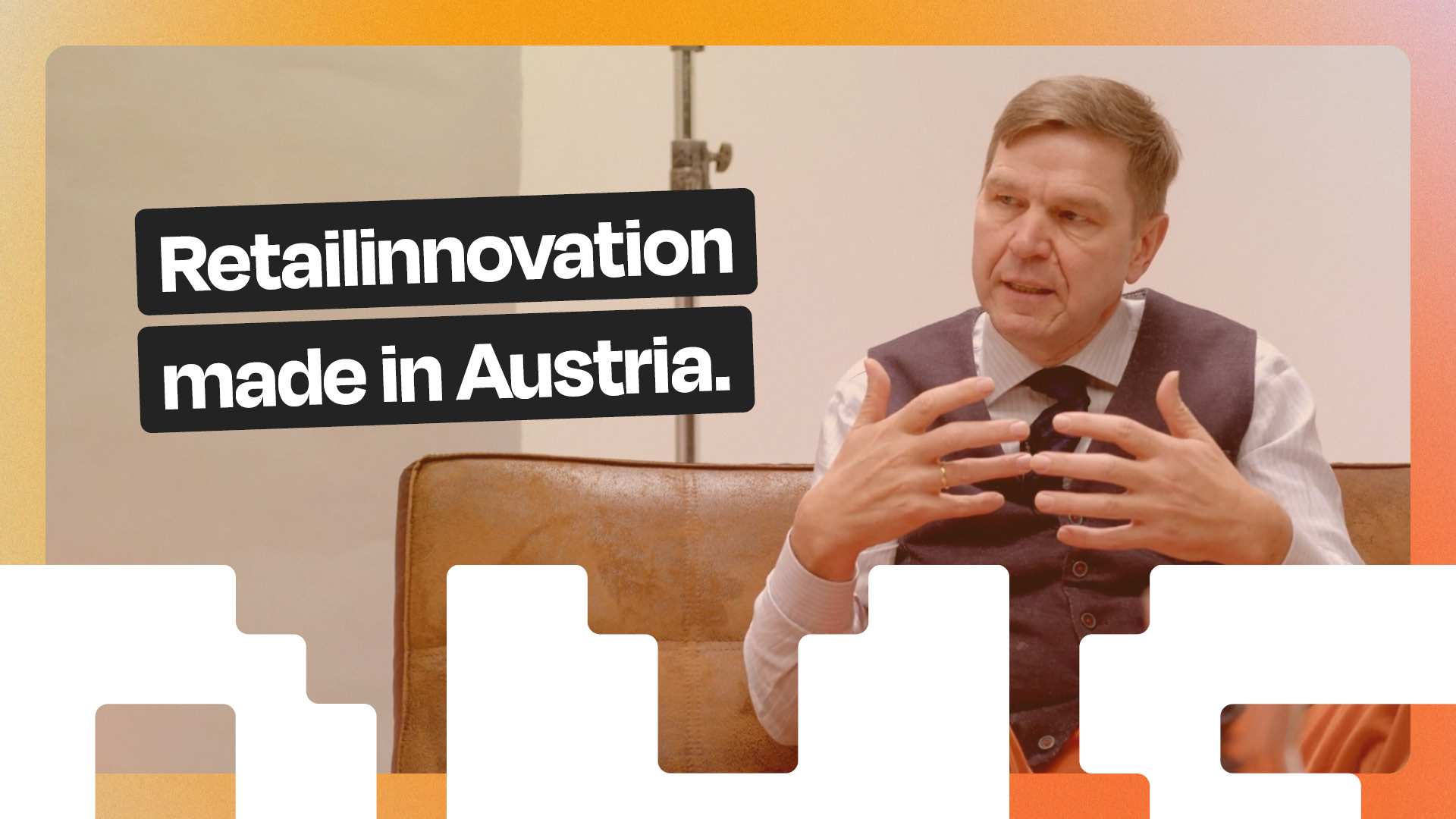
Everything stays different — a saying that has never been more relevant in retail. Many new opportunities are on the horizon. And in this DMS Talk, we’re thrilled to welcome Oliver Nitz, CMO of DMS, with Werner Wutscher, founder and managing partner ofNew Venture Scouting, sharing his expert insights with us.
Modern Talking: Retail Is Changing
First of all: a lot is happening — and this is the kind of change that’s reshaping the retail world. But it’s not just about developments like artificial intelligence, which already opens the door to countless new possibilities. It's innovations like these that drive transformation — but there's more.
When It “Clicks” in Retail
On one side, BILLA is halting deliveries to rural areas after online ordering. On the other, providers like Alfies are adapting their offerings — especially around delivery times. Then there’s the rise of empty storefronts, as discussed in DMS Talk 8. Dr. Roman Schwarzenegger from Standort + Markt and Manuel Friedl from the trade association explained how retail is “clicking” more than ever. Online retail is no longer just a growing trend — it's now mainstream.
During the pandemic, online shopping was often the only option — safe, convenient, and above all, possible. Since then, the digital domain has remained the preferred space for many consumers. Retailers have adapted — and not just survived but optimized their online options. Yes, it clicked. Online retail not only saves on store rental costs, but also impacts layout and staffing needs. The result: more vacancies in physical retail — and a growing low-cost provider segment. Companies like Action, Temu, and Shein, despite facing public criticism, continue to generate strong sales both online and in wardrobes. However, economic uncertainty, inflation, and unstable geopolitical conditions continue to challenge start-up and scale-up investments — keeping the landscape tense.
Ideas and Innovations — Sought and Promoted
At a time like this, retail needs fresh ideas — and the good news is: they’re out there. Austria in particular must now invest in meaningful innovation. While much of the funding is still concentrated in the early stages, scale-ups are gaining more traction thanks to expanding financing channels — and universities play a big part in this momentum.
Austria boasts the third-highest research rate in Europe. And the motto remains: Challenge and promote. Why? Because the know-how collected through research can deliver a real boost for retail. The goal: to push the industry upward.
Excellent Shared Memories
Oliver Nitz and Werner Wutscher revisit their own memorable experience: Wutscher awarded Nitz and his DMS team the prize for Most Innovative POS Solution — developed for ABHof and METRO. As Head of Innovation in Retail Group, Wutscher presented this award at the 2019 Retail Innovation Awards. A true wow moment for DMS — and one we’re proud to talk about again here.
Even More Wow Experiences: We’re Already Working on the Next DMS Talks
Our job isn’t just to inspire — it's also to continuously exchange insights with industry experts. We stay connected and explore trends that often surprise. Stay tuned!
And of course: if you're interested in our solutions — whether it’s Digital Signage, In-Store Radio, Content Production, or Location Analytics — we’re here to inspire you, your customers, and your partners. Always guided by our motto: What isn’t wow, isn’t from DMS.
Please note: this DMS Talk is available in the German language only.
Transcript of the DMS Talk – For Reading
DMS Talk – Retail Innovation & Corporate Collaboration
Oliver Nitz (DMS):
Welcome to the new DMS Talk. I believe this is already the eleventh one – on the topic of Retail Innovation & Corporate Collaboration.
My name is Oliver Nitz. I’m with DMS and will be your moderator today.
We at DMS have been active in the market for 20 years – with a strong focus on retail. For us, that includes chain stores such as banks, retail companies, grocery chains, and many more. We extend physical spaces with digital media and services: Digital Signage screens (including content), in-store radio, as well as frequency measurement & analytics – a fast-growing field for us. The goal: to know more about branches and customers and to deliver better content – for example, on screens.
Our claim: Digital with purpose – for the satisfaction of our clients.
My guest today is someone I’ve known for several years – he kindly presented us with the Austrian Retail Innovation Award, which we won together with AbHof (a startup for producers) and METRO for the most innovative press solution.
Please welcome Werner Wutscher, Founder & Managing Director of New Venture Scouting.
Werner Wutscher (New Venture Scouting):
Hello, thank you for the invitation, Oliver.
I founded New Venture Scouting in 2013. Since then, we’ve been building bridges between traditional companies and startups/founders. Back in 2013 – before the big e-commerce boom and the social media wave – this was new to many. Since then, digitalization has greatly transformed retail. We bring both worlds together because that’s where innovation happens.
In the Austrian Retail Association, I had the privilege of leading the innovation division – that’s where we met – and we built the retail-startup cooperation program. This allowed us to closely accompany the industry’s transformation.
From Corporate-Startup Circles to University Tech (Deep Tech)
Oliver:
Has your focus changed over time?
Werner:
Yes, significantly. In 2013, few people even understood what “scouting” meant. Then came a phase when everyone wanted to do startups – often without real purpose or method. Around 4–5 years ago, we shifted our focus more toward universities and science-based spin-offs (Deep Tech). We still work with corporates, but the returns and impact are often greater with technology-driven initiatives.
Why universities? Because they hold an enormous treasure trove of technology – but very few people translate research into business models. Accelerating the transfer of science into society is a key question for Europe.
Example: Search Mandate & Cooperation Logic
Oliver:
In the past, companies used to come to you with very specific search requests, right?
Werner:
Exactly. Example: A global search assignment (including Philips, Liebherr, and a clean-room technology provider): “Find technologies that can measure the shelf life of food contact-free and non-destructively.” We love such global searches because they connect solution providers with problem spaces – and trigger innovation.
Translating Culture – Or It Fails
Oliver:
How do you prepare both sides?
Werner:
The main reason for failed collaborations is culture. Startups and corporates operate differently. We act as translators – on both sides:
Corporate view: A three-person team isn’t a classic supplier following a rigid specification – but it delivers something new. Expectations must be adjusted.
Startup view: A corporate is professional and process-driven. This isn’t a pitch event – it’s about clear answers and deliverability.
Typical Pitfalls (Top 3)
- Overblown expectations: “They’ll just program that for us – outsourced, done.” That’s not how it works.
- Interfaces: Terms and conditions with excessive liability; first a “yes,” then procurement/legal with new rounds; payment terms of 180 days – that kills a startup’s cash flow.
- Strategy vs. Finance: Corporates are strategic investors. Startups must understand what rights/plans the corporate pursues (up to acquisition). It’s fairer today than in the past – but still crucial.
Cooperation Models – From Sales to Joint Ventures
- Customer relationship: The corporate buys – a great reference for fundraising.
- Revenue sharing: Test spaces/shelves, revenue share; the corporate provides distribution or space.
- Development partnership: e.g. IoT – joint specifications, clear roles, go-to-market strategy.
- Equity/Joint Venture: More insight and influence – can be positive, but requires clear governance.
Who’s Doing It Well?
Werner: In Austria, for example:
- U:nyque Health (UNIQA) – corporate innovation with own health services, close startup cooperation, own venture arm.
- AVL List – globally working with startups in vehicle technologies.
- Raiffeisen Bank International (Elevator Ventures) – corporate VC; the cooperative group is also building its own CVC structures.
- In retail, REWE, SPAR & others are lowering barriers (startup shelves, pilot stores, structured processes).
Does Retail Need Startups?
Werner:
Yes. In daily operations, cost and process efficiency are mandatory – innovation often gets lost there. Startups are speedboats: they test, learn, externalize risk, and gain time-to-market.
Digital tools and Gen-Z proximity create new segments and experiences – which help retail evolve.
Financing & the European Perspective
Oliver:
What about financing – are there more startups? Enough capital?
Werner:
The ecosystem has matured: aws, FFG, business angels, VCs – all good points of contact. But Europe is experiencing capital outflows toward the U.S. and Asia. Reasons include:
- Regulation (e.g. AI): Startups relocate to the UK/USA, and investors follow.
- Capital markets: Europe is dominated by bank lending; the U.S. by VC/PE. In Europe there are only ~25 funds over €500 million – in the U.S. there are many.
- Labor market: Good jobs slightly dampen new company formation (Austria: 270 startups/year, declining).
Problem area: Scale-ups (Series B+). Early-stage funding is well supported, but large rounds are rare. Then strong teams move abroad (with terms like “Move HQ to the US”). Result: value creation – and jobs – shift away.
Austria’s Research & Knowledge Transfer
Oliver:
Austria has a high research ratio – how can we leverage that?
Werner:
Education and research are key. But the transfer from university → society is still weak. That’s why, in 2024, we published a guideline with partners (including the Ministry of Education, Science & Research): standards for IP, licenses, university participation, and processes – to make spin-offs faster and more transparent.
Best practice: UnternehmerTUM (Munich) – brings capital and industry together on campus; Basel (Pharma/Life Sciences) does similar. The proximity of universities and companies is decisive.
Structural Change in Retail – What Really Helps?
Oliver:
We’re seeing strong shifts: fashion leaving high streets, discounters moving in; gastronomy doesn’t fully compensate. Online is booming, while inflation and uncertainty weigh heavily. And what about Shein & co.?
Werner:
Digital models with ultra-short cycles and disintermediated supply chains (direct sales, social-signal-driven, customs-free thresholds) are hard to catch up with.
Retail’s answers: faster cycles, sustainability & regulation. And consumer literacy: a €2 T-shirt cannot be fair or sustainable. We need awareness and frameworks.
Oliver:
And brick-and-mortar retail?
Werner:
The marketplace has always been a place of encounter. Physical retail wins through experience, advice, and social function – ideally across sectors (city centers, malls, pop-ups, services). Sustainability and values should take center stage. And processes must live up to the brand’s purpose – otherwise it backfires.
Oliver:
Werner, thank you for these clear insights – from university transfer and deep tech to corporate collaboration, regulation, and retail. Fascinating stuff. Maybe we’ll do a second episode and dive deeper.
Werner:
Gladly – thank you for having me!
Oliver:
Thank you all for watching!
More DMS Talks.