DMS Talks
Omnichannel Retailing — Many Channels, One Goal.
Apps, blogs, and communities are playing an increasingly important role in the shopping journey — whether it’s ordering online and picking up in-store via Click & Collect or Click & Reserve, or managing returns smoothly. That’s exactly where omnichannel retailing comes into play. Today’s diverse sales channels all need to lead to one goal: the retailer’s success. And that requires comprehensive channel management — from Click & Collect and Click & Reserve to seamless returns handling.
In this DMS Talk, selected insiders once again join DMS CMO Oliver Nitz to discuss the challenges and solutions behind omnichannel retailing. Alongside Timo Emmert from MediaMarktSaturn, we welcome Klaus Slamanig from Nespresso Austria and Dr. Rainer Trefelik, Federal Chairman of the Trade Division at the Austrian Federal Economic Chamber. Another exciting DMS Talk packed with valuable insights on the powerful topic of Omnichannel Retailing!
Please note: this DMS Talk is available in the German language only.
Transcript of the DMS Talk – For Reading
Welcome & Participants (DMS Talk Omnichannel)
Hello everyone. Yes, thank you for your time for our DMS Talk. It is our fourth that we’re doing on retail topics, and I am especially pleased to have here with me: Rainer Trefelik, because he is the WKÖ chairman of the federal division for retail; Timo Emmert – greetings – live from DMEXCO in Cologne. MediaMarktSaturn and your e-commerce old-hand, so to speak, will of course say a few things about it in a moment; he and Klaus Slamanig from the company Nespresso. I hope it will be an interesting hour – it certainly will – and I am happy about your participation, happy about your attention, and very gladly afterwards or in the course of it then to ask a few questions via the chat. We will try to answer them. And yes, I would pass the floor to dear Timo on the topic of omnichannel at MediaMarktSaturn, and we are already very curious.
MediaMarktSaturn: Introduction by Timo Emmert
Many thanks – and very, very many thanks also for the invitation, which I was very happy to accept. I thought about it, I brought along a few charts. I believe some things can be visualized or presented a bit better in charts. I’ll briefly share my screen. So – perhaps a quick signal whether it’s working. – We can see everything. – Yes, excellent, thank you.
My talk today: the next ten, fifteen minutes; then gladly, we can also make it interactive. If there are questions, please feel free to interrupt directly. Today I would like to talk about the fast business with us, about MediaMarktSaturn – in this case gladly. Of course, we are in very, very close exchange with many other countries, of course also in the DACH region. But today the focus is first on Germany. I am responsible on site for the German business and would like in the next few minutes to present, on the one hand, how we – well, I’ll say – positioned ourselves during the pandemic, how we then – I’ll say – positioned ourselves coming out of the pandemic with our strengths but also with the major challenges, and in particular, of course, what the great asset is and what it means to truly operate omnichannel: strongly from the customer perspective, but of course also from the company perspective.
Brief introduction & role in e-commerce
Great. Maybe two sentences, Oliver, about me. Right, you already said it. So: I’m 44, two children, I’ve now been working in retail for 15 years – so to speak the e-commerce old-hand. Well, for two, two and a half years I’ve actually been responsible as managing director for the e-commerce business in Germany. Originally – so a bit of a red thread through my CV – from finance and strategy, had various sub-areas there as well, including one at MediaMarktSaturn.
If we now jump to us: Andreas is also on the call today – the dear colleague from Austria, who very successfully is also responsible for the digital business in Austria.
Customer touchpoints: reach & loyalty
And if you now take a look at Germany: How do we position ourselves? Today I wanted to talk less about revenue mapping at first, rather put the customer in the foreground. Because today it’s simply about customer touchpoints. And you can see relatively nicely on this chart – also on the other side, what can also be a challenge. And if I briefly go through the fields: We’re talking per month about 70 million visitors on our two online shops mediamarkt.de and saturn.de. But we are also talking about 20 million visitors and customers per month in our stores, 430 in number, roughly spread across all of Germany. That means first of all 90-plus million customer touchpoints per month, where we come into contact with the customer in different ways. That is a huge opportunity for us, but of course it also means dovetailing and connecting the two channels efficiently.
If you look at the two fields at the bottom – on the one hand our loyalty program again, I’ll come back to that later: what loyalty also means for us and how loyalty is to be understood in the current, truly difficult, dynamic environment. But in any case: Over the past years we have managed to build a loyal customer base of around 11 million across both programs: on the one hand the MediaMarkt Club and on the other the Saturn Card. And on the right side – if you translate that to Germany – how many do we reach and how many would we in fact say are MediaMarktSaturn customers? That’s about two thirds, whom we would accordingly also designate as our customers. That as an introduction to MediaMarktSaturn and to what, in principle, awaits us in the next few minutes. And I would always like to call this up again and look at it again and again, because it is of course one of our core tasks: not only to put the customer at the center, but of course also to reach the customer very efficiently on all channels.
“Am I still online?” – yes! (aside)
I am also – I am also online, right? – Yes, yes, of course. Only for the brief interruption. Exactly, because I didn’t see you just now, because – as I said – I’m a bit on the move here. But the connection is holding.
Interlocking channels: tracking, history, outreach
This chart is meant to make clear again what I picked up earlier with the customers. That means, when we talk about customer touchpoints, it means of course both online and offline – logically to track the customer’s behavior on the one hand, to understand the behavior accordingly, also to understand the history accordingly and to address the customer very efficiently on all channels, at the right time, with the right channels and with the right means of communication. So: This has logically become an extreme challenge in the last months, indeed years, because significantly more competitors, also significantly more retailers, think digitally, act digitally and invest digitally.
That means: The budget pots have, on the one hand, of course also become tighter or – in our case – larger in the sense of a ticket, a click. On the other hand: If I want to reach the customer, I of course have to set myself up more broadly and, on the other hand, also seek – logically also organically – to support my growth, my traffic, my frequency accordingly.
Omnichannel as an asset vs. pure online players
If you now dive into the omnichannel world of MediaMarktSaturn, we see it – and that’s what it says here on the chart – firstly as an asset from our point of view, because we – like other competitors or core competitors such as OTTO, Amazon in Germany – of course have the great advantage of being able to address the customer on the sales floor on the one hand and of course online on the other via so-called Click & Collect. But to have the omnichannel core business, as we understand it – accordingly not only to address, but logically also to convert and convince with our offers there.
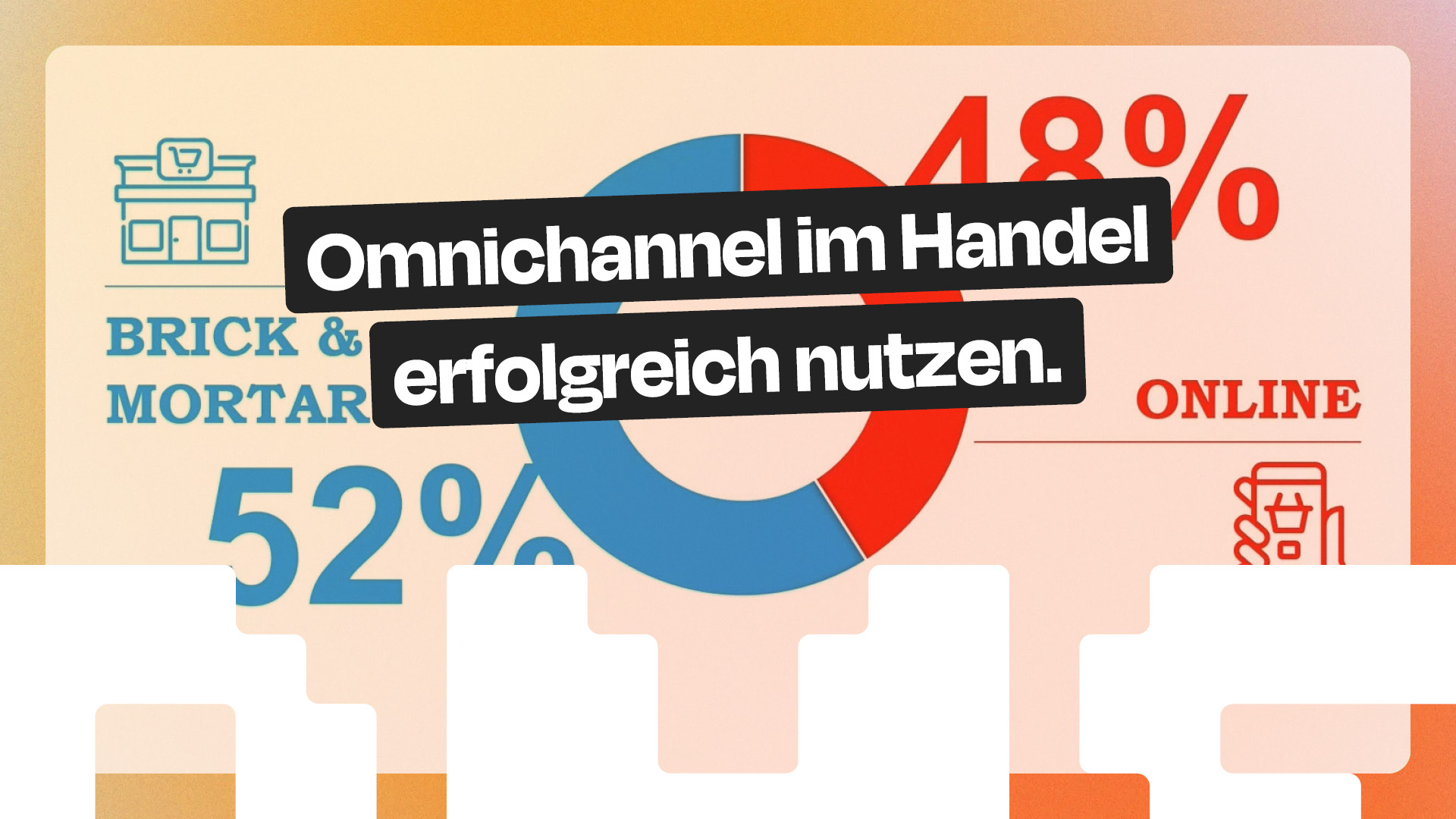
And if you now look at the German market – which differs in its orientation and its maturity of course from Austria, but also from our other 13 countries – we now have it very strongly online-driven, very digitally driven. If you look at the chart: For consumer electronics we are now talking about an approximately halved market – on the one hand very stationary and on the other hand online. If you were to also add the growth figures, you would of course have – especially in the last years, but, I’ll say, pandemic aside – even afterwards, how the market is currently stabilizing relatively strongly, consolidating: growth figures of 10 to 15 % in the online segment, and the classic stationary or offline business is currently moving rather stagnant or even slightly declining. And that is of course also clear for us, when you talk about dovetailing via omnichannel, that on the one hand you want to gain market share in a market that is growing – hence also strong investment towards online. But I’ll come to a few numbers in a moment – also regarding the group, but also for Germany – how we have developed and ultimately what the ambition is for growth.
Why omnichannel customers are more valuable (GfK)
When you talk about customers and customer behavior, which has of course also adapted very strongly – to the dynamics of the market, the speed of the market – and is of course also very different across the two channels: Because the customer doesn’t think in channels. The customer thinks of the best offer, the customer thinks of the highest convenience for himself. It’s relatively irrelevant to him where he buys. We, in the company, still tick very, very strongly by channels, and that is a big challenge for us. And I would like to briefly show you on the next two charts what an omnichannel customer is on the one hand and, ultimately, how valuable an omnichannel customer is.
And you see on the chart – on the one hand source: GfK, this concerns the German market, again the German consumer-electronics market – three distinctions: On the left we have the offline customer, who shops exclusively in store. He currently accounts for about 44 % of the market. And on the right we have the pure online customer – he, for us, represents about 13 % of the market. What is exciting is, logically, the middle block – that is exactly the dovetailing of online and offline, the so-called omnichannel customer. He accounts for 43 %. But what is very exciting: you see significantly higher spendings. That is exactly the point we keep picking up and focusing on. And we now see that in the next chart, because these 61 % of total spendings that the customer is willing to spend more, we also see that – broken down – in our numbers.
Retention, frequency, basket: MMS internal data
These are now our numbers broken down. What do we do there? We looked only at the omnichannel customers at MediaMarkt and Saturn and focused on three criteria or highlights: firstly the retention rate. Secondly, the annual purchase frequency. And on the right we have the spend – ultimately that is exactly what we just saw with the +60 %. So: How much more does he spend on average per year? And that is always relative to our classic online-only customer – that is exactly the core competitive field in which we operate, especially in Germany, with OTTO or also Amazon, as I mentioned earlier. And here you see exactly these jumps: +19 %, that is, he is significantly more loyal. We can much more quickly transfer him into programs, so that he displays a certain loyalty and also repeat purchase rate – in other words: comes to us more often. And we see that especially in the middle – so in the right block. That means: when he buys, he buys more frequently, and when he buys, he buys significantly more and spends significantly more money. And he does that – why does he do that? – because he naturally takes advantage of these added values of omnichannel for himself.
Click & Collect, cash payment & country differences
That is, on the one hand, clear: He can buy in store. We still have a relatively high rate – especially in Germany – regarding cash. That means: He can, online, nicely out on the couch, choose his product, buy the product, but only pay upon pickup, and – interestingly – up to 70 % in cash. A big lever, still a big lever – especially in Germany. If you compare that, for example, with Sweden – a very different level of digital maturity – that is in fact a method of payment or also a functionality that the customer practically does not make use of. In Germany yes, in Austria too. And thus, on the one hand, not only the manifestations and functionalities of the individual countries in our group are different, but we also see here a huge asset compared to our core competitors.
Digital share & profitability: finding the balance
I’ll jump now to a few numbers, because I would like to shed light once more on one thing: how we developed in the context of the pandemic. And I said earlier: We are already relatively long out – it feels – of the pandemic. What has stabilized? And what has stabilized, you can see here in the bars shown for the first quarter – but you can transfer this fairly evenly to the first half-year. These are the so-called digital shares of sales, of total sales, in this case for Germany. And you can see the trend from 2019 to 2022. And if I now talk about 33 % in 2022, that is always the share – and what do we mean by digital? We always talk about the revenue we generate via our shipping business, via our pickup business, via our same-day pickup business. And that, logically, flows completely into the consideration. And at the moment we’re talking about 33 %.
Now someone could say: Well, on the chart before you said the market is roughly 50:50 divided in terms of classic potential – internally, speaking of revenue, you cover only 33 %. That’s correct at first. And that means: We have massive potential for growth. But it also means – and you can see that partly on the right – that if we grow online, we of course always have the great challenge not only to grow in revenue and generate market share, but of course also to present profitable growth. And profitability – I think everyone can imagine that – is easier on the sales floor with the support of the staff, with the human factor: to sell an insurance, to close a financing, to ultimately generate a TAR, than to do this technically via an online shop. And that’s why the driver for us is always a bit: growth – on the one hand to generate market share to also take the growth, and on the other hand of course to present profitable growth and, logically, to compensate for what we partly lose on the sales floor. That is an important message on the chart – not only positive in the sense of growth, but also that we, logically, do not neglect but ensure quality.
Time check & outlook
So – a quick look at the time: I think I still have a bit. – Or host, feel free to jump in. – Great, I still have two, three charts here; I don’t want to go into the trend in detail. The message here is very important: It’s about the whole topic of stock and inventory management.
Ship-from-Store: from lockdown to core function
And I think some have also read that many – now discovered in the last one, two years – especially many retailers in the USA have the so-called ship-from-store as a function. We did not in fact discover that, but had to – you can see it here: In the first lockdown that took place in Germany, end of March to end of April, we had to close the stores from one day to the next – just like in Austria and in many other countries. That means: What did we have from one day to the next? We had our inventory in the stores and were relatively quickly sold out online, especially for the demanded items: homeschooling, home office – whether that was ink cartridges, the printer, the laptop, etc. And we reached our limits extremely quickly. That means: In the first weeks, everything revolved around availability – price hardly played a role, but in fact: I need the printer, I need the device, I also had to ensure my home office. I couldn’t leave the house, the stores were closed.
So, and then we had to relatively quickly – also in cooperation with the tech colleagues, with the supply chain colleagues – get to our inventory: store inventory – 430 stores, inventories of over one billion, which were simply de facto not accessible. How do you gain access to the goods – especially to the relevant goods? And that’s how ship-from-store came into play. And this functionality then helped us within a very short time to access the store inventories. We managed within two weeks – you can also see it relatively nicely with the peak of the blue line, which, for us, describes as a percentage of the orders which channel it comes from: HD stands for home delivery, SFS for ship-from-store – and we managed to fulfill 90 % of our orders completely via the two channels and access the inventory.
You have to imagine it like this: From the customer’s perspective, it is a similar purchase as shipping. That means: The customer puts his product into the cart. In the cart, in the background in the backend, a query runs: Is the product available in the online DC – we have four of them in Germany? If that is not available in the online DC, then please access the nearest store – match the data with the postal code, with the region – and then it goes store by store and checks availability. If that is then true, then it selects the store; that is: the order goes to the store, the store receives the order signal and fulfills the goods and then ships them via our service providers directly to the customer.
And this functionality – sounds super simple – did not in fact exist before; the idea, yes, but not in the execution. And of course that helped us extremely, within the shortest time, on the one hand to bring the inventory to the customers, to make the customers happy, and on the other hand of course also to compensate, in part, for the sales and earnings we had lost in the stores. And that was important for me again today, because ship-from-store is now established – not only with us, in Austria, in many other countries, also with many other competitors – and is, in my view, one of the core functions of tomorrow’s sales floor, the stores of tomorrow. Because – I am firmly convinced – the store must, on the one hand, try to create a shopping experience for the customer, in whatever form, and on the other hand it must serve as a fulfillment center. And this role as a fulfillment center – for me, it somewhat emerged during the lockdown, at least at MediaMarktSaturn.
Question: How did the stores “learn” delivery?
Question: “That actually means – to jump in during the lockdown – how you implemented this in 14 days: Were the stores then actually able to learn this delivery topic? So that was a bit of a punch in the face, if you will – like for all of us – but an interesting way. I think, under certain circumstances, you might not – I’d like your assessment on this – have been able to implement it at that speed. Yes, either way, right?”
Timo: Certainly not, Oliver. So I think even the whole topic of digitalization in our company we would never have included in the form – where it stands now –; ship-from-store included. And of course that also created many quick paths, quick decisions strongly out of necessity. The teams were brought together relatively quickly, worked cross-functionally – for me also the decisive point. Which leads a bit now to my last chart – or a good transition – because these are, for me, also the big three drivers that we currently see at MediaMarktSaturn after the pandemic. And it initiated quite a lot – and perhaps to anticipate the right-hand topic: organization. That is for me – as just said – not only to expand the competencies in supply chain and digital, but also to promote them and, of course, to give the staff, the people, a perspective to develop further there and to work functionally. And that was a nice example: ship-from-store. Because there, from different core areas of retail, people really came together and had to act jointly and ultimately developed and executed this within 14 days. Otherwise that would probably have taken 6, 8, 12 months in our company. So Klaus will then also say a bit about the topic of organization – that was also somewhat his topic, his hobbyhorse, his task. Therefore it is also a good template.
Q&A: Who packs in the store? How organized?
I naturally have a few questions: Who in the store is actually tasked – with the fulfillment? Was an extra department then set up for this, or were there already these people who then, as it were, receive this order and then prepare it in – as it were – in the warehouse or for pickup? And question two: So once reopened – did you then create an extra area for it, where I as a customer go?
Timo: So exactly: We had to help ourselves, of course, we were – in fact – in a staffing situation of short-time work; one store manager was there, who then also had to lend a hand. That means: The store manager had to pack and ship parcels himself. He then did that with a small selection of his staff. That was the lockdown mode. How does regular mode work? – So: somewhat similar. We have of course now also tried to block off staff accordingly. That means: In Germany – depending on the size and of course transactions – staff are assigned; they pick out of the regular process, that is: They go through the store and pick the goods. And in larger stores, it is sometimes the case that a small team has really been set up – of four to five, six people – because there are relatively high transaction numbers per day. That varies greatly – from store to store, because we have different sizes. But you can – just as you said and described – that’s how it currently is. And that of course now has to be expanded further, because that is a fixed component of our business and – in my opinion, my personal opinion, as I said earlier – one of the essential roles of the store of tomorrow.
Market shift or additional growth?
Question: “One more question about the numbers – and I’ll pick something up in a moment, too, from a participant: With orders and purchases, is this now more of a redistribution among each other, which everyone feels – that the stationary then becomes more digital with your customers? Or is it overall growth, because somehow the attention is on the topic?”
Timo: So we see growth relatively strongly in the omnichannel area – that’s quite clear. The stationary business “in the market” sets the tone: If the market stagnates, we of course also see a certain stagnation with us. But with us it is naturally also driven by equipping the store now with different other experiences. So – as I said – let’s come back again to the role of the store, and that naturally implies declining customer frequency. That means: We observe the frequencies in the stores partly already; over the last two, three years they have been declining in the entire industry. Accordingly, you must try exactly – and that is the counter-movement – how do I then, digitally – also via the webshops with us – bring more frequency into the stores, and how do I ensure that the customer accordingly … Click & Collect and the pickup option are ideal for us to connect the two channels – and then of course also to see that we somewhat compensate this loss of frequency in the stores. And that is also the strategy behind it for us: to curb this somewhat. But yes: Of course we feel it.
Central control: performance marketing & retail media
Question: “And the topic of performance marketing and this supplying of customers online, who then carry out Click & Collect – but that lies in central hands, right? Does each store or each country do more of it itself?”
Timo: So performance marketing and the steering are in our central hands. We control the budgets directly via Ingolstadt or Munich. The same is – as I briefly mentioned before; DMEXCO is just a hobbyhorse for this – the whole topic of retail media, that is the monetization of digital surfaces, partly also on the sales floor. We also do that centrally. It always depends: We recently had a big opening in Berlin with our new Experience Store, with the flagship store. That has a certain dimension – there you can of course do a bit of regional steering. But everything runs centrally.
Question from the chat: Most innovative MediaMarkt in Vienna
Question from Alexander Kleinschmidt: “Hello Timo, on Mariahilfer Straße in Vienna the most innovative MediaMarkt in Europe is being built. What’s behind it – what exactly is the innovation?”
Timo: Yes, so that is, in principle, what I mentioned. We want to now open this in several German, in several European metropolises as well. We have now launched this in Italy. We now have – as I said – very recently in Berlin at Alexanderplatz. Something similar is accordingly emerging in Vienna, where we – well, I’ll say – are opening smaller shop-in-shops. That means: much closer to the customer, creating much more innovation, experience. We have a hobbyhorse in the current strategy: We used to be the category killers – we created a category with MediaMarkt and Saturn across Europe. And now we want to create a new category – and in principle that is the topic of experience, customer experience. And you can of course achieve that extremely well on the sales floor – on the one hand via the products, on the other hand via services and of course via the staff. And those are somewhat the building blocks of the new customer experience from our flagships – and that will also be created in Vienna. And that is exactly what, I suppose, has just been referred to. And you can see that very, very nicely in Berlin at the moment – near the Alex, I saw – it’s cool.
Moderator: Perhaps also as a transition: That means you are working with shop-in-shop. As an external brand, your supplier, I can then also sort of rent a space there and do something in branding. – Timo: Important channel. – Moderator: And yes, I’ll say: Thank you! Are there any more questions for Timo?
Moderator: Okay, then I would say: Thank you – very cool. With pleasure. Brand – and Klaus, yes, transition to you as a supplier also for MediaMarkt as a partner of the stores, and I think that actually fits very well now.
Nespresso: Omnichannel, Boutiques & CX (Klaus Slamanig)
Klaus: Yes, many thanks. Yes – and thank you for the invitation, Oliver. I’m very pleased, and I can actually only agree with Mr. Emmert’s remarks, to which I listened very carefully, in extremely many respects. The world has changed, and I think Rainer, as head of retail, knows exactly that in Austria the whole digitalization accelerated once again extremely.
Yes, briefly about myself: Klaus Slamanig. I am the B2C Commercial Manager at Nespresso in Austria. That includes for us the e-com part, the trade part and the boutiques. And I have been privileged to hold this position for several years now and have been with Nespresso in Austria for 18 years.
Omnichannel – Nespresso actually grew up with e-commerce. That was the start of Nespresso: the first capsules were actually sold only via e-com. But at some point we then thought, we’ll try the stationary channel – and then see what happens: because customers can try it, drink the coffee and test it. And that was then our breakthrough success, that alongside it also this channel category then developed extremely strongly for Nespresso and we now have over 800 locations worldwide.
From theory buzzword to practical omnichannel work
But the topic omnichannel was for a long time run very theoretically by companies – and also by us. Yes – if you asked someone: What is omnichannel? – everyone said: “Yes, of course – seamless transition from A to B to the other channel; everything should be the same, the design should be the same.” But what in detail and what exactly is behind it – yes, honestly, we didn’t know. Because it was always a big, very theoretical topic. And – as Timo also mentioned – we were also divided into channels: everyone had their own channel, there was the e-com channel and the trade channel, and at some point in the background someone was always running some promotion somewhere. Yes – sometimes we then had machine promotions in one region where the rest of Austria didn’t even know what was happening there.
And in the course of a large reorganization in 2017, all channels were then brought under one roof – which I can now be responsible for. And we then started, also as management, to look at: What actually happens in these channels when we have a promotion? Our management was present in all channels. We launched a large promotion across all channels – and we wanted … we tried to redeem a voucher somewhere – and actually failed at the first POS: with which hurdles the customer then has to deal. What happens? You have to enter a serial number, you have to fill in everything, then you have to physically throw it in; you only receive confirmation three days later that the credit is then on the system, etc. And this experience of this one voucher redemption felt different across the board – a bit different in e-com, on the internet, and different in the boutique.
Systematic feedback loops & KPIs (NPS, mystery shopping)
Yes – and we then said: Okay, we now have to take a look at this: It cannot be that for one and the same thing the experience for the customer is always different in the various channels – even though Nespresso is written on it. And so we began to look at which feedback channels we have – for example boutiques, where we get information back about the individual promotions and what customers actually say about these promotions. We then started to collect – to first see: Okay, what do customers say? But we began to listen: What does the customer say about the promotion? What does the customer say about the product? What does the customer say about the brand, etc. And what does the customer also say about the experience on the line (hotline) or in the boutique? And this data set became bigger and bigger. Then we categorized it and went more into detail.
With these insights we started to build our own feedback management and began to evaluate these points and to say: Okay, what does that actually sound like? Then: Should we collect all these pains (pain points) that customers have out there – which we have now started to consolidate – in one central place? In the past it was indeed the case that the customer reported it – but, for example, to CS/CSI (Customer Service). And CS of course tried to somehow solve it. But this information, how they solved it, never went into the other channels. And then we started to place this information in the company with our own system to the most diverse channels in one place, so that all channels – or all frontline people – could or can now access this information.
Especially at Nespresso, service always plays an extremely important and major role. We naturally have multiple systems behind it: We have mystery shopping, we have NPS, etc. – so various KPIs. And we realized that these KPIs were again only linked to the individual channels, but not integrated into each other – so that we would say: We want mystery shopping across all channels, no matter where – and arrive at the sum (so at a certain percentage) that says: Okay, that is acceptable for us. We also started to integrate that with each other.
26 touchpoints, CX projects & organization (TX/CX manager)
And when this process was completed, we began to analyze more precisely the customer pains in the individual channels. That means: Which pains are there in a boutique? – we found that we had certain credit card solutions upside down, as an example. Or on the site (website) it was then the case that we had our entire delivery services hidden somewhere at the back – or also didn’t yet have certain payment solutions, etc. And out of this whole exercise we then started to analyze these 26 touchpoints. We began to classify them: Many things we could solve ourselves, but a few things we needed our international units for – and we tried to remove these pains – always with the customer at the center. Conventionally we say – almost everyone says – that the customer is the center; but also really always to look: Do we remove the hurdles completely in the individual channels?
We then at some point managed that – and that is now actually regulating; that has actually also passed into our daily DNA. Subsequently – after we removed these major pain points – we looked at: Which types of customers always come to us? And then we created personas – four typical personas that regularly visit our touchpoints – and then looked at: What do all four personas need at all touchpoints? From this then emerged the first large CX projects that actually affect all channels and all the different touchpoints in the company. Just as an example: the big new product launch we had last year – Vertuo (yes/no) – that was the first big cross-border – that is, cross-channel – project rollout that was successfully implemented by us across all channels, where we really looked at everything. But the journey continues.
In the course of this journey that we have now taken over the years, we have seen: Okay, the organization – we must try to break down these silos. That has always been an issue. And we installed a so-called CX/TX manager, and from each channel so-called champions joined. Across the whole company we now have 15-plus champions, who together with the TX manager – once a week – always look at the customer feedback. Yes, we also tightened the loops of customer feedback much more: Previously in the past we looked at it once a month and made an analysis; but now this happens weekly, and then it is reacted quickly. If, for instance, there is an issue with IT – or “because the customer can’t open his account” – or because an order is stuck: That used to be reported much later, because we were not constantly looking at the systems and had no one who felt holistically responsible for this topic. That usually – as always – ended up first at CS/CSI, because the customer says: “I can’t place my order” or “My order is stuck” – as an example.
But the journey continues. We are doing this. For this year, we’ve put the whole topic of payment solutions on our agenda – we have to develop that further. The topic of delivery – which was also addressed by my colleagues at the time – is indeed a big topic that someone is interested in; that is at the end … but also the topic of content is a huge topic, because there too the channels were operating independently at our company – and that too is being consolidated more and more, so that, as soon as a big promotion is played out across all channels, you always have the same picture and immediately know where you are and what it is about.
Q&A: Click & Collect, service & returns (machines)
Question: “Do you also offer Click & Collect? – Silly question.” – Klaus: Yes, of course we offer that. We offer it in all shops in Austria. But one must say: We already offered it before COVID; the customer rather hesitantly used it with us. Because we have the classic customer groups: Either the fans in the e-com area or the fans of the boutiques. The fans of the boutique are extremely large in Austria. But during the COVID period the fans of the boutiques also learned to love this Click & Collect – or rediscovered it – and it now works better than in the time before COVID.
Moderator: Yes – so I mean, by chance I was at your Atelier this morning – that was simply out of pure curiosity, because a client of ours is diagonally opposite – and I can say it was buzzing. I was amazed at how many people were using your bar there and having coffee made by the barista. So: was cool.
Klaus: One addition – even though you’ve now mentioned the Atelier: Also in this whole story – which has now gone on for several years – we have of course considered which role each channel plays, and specifically: Which role should the stationary sales play for us in the next ten years – or in the future – actually? Because we all know that digital transformation cannot be stopped – it will continue. But: How can I nevertheless keep the brand present – visible, really out on the street? And we completely rethought the role of the boutiques. And – since you mentioned the Atelier – that is of course our flagship store; and we want the Experience Boutique – the world’s first – which we are very proud we were allowed to launch in Austria. And also the topic experience – our colleagues at MediaMarkt like that. And that’s where the action is: starting from personalization to continuous masterclasses, to evenings with coffee cocktails, etc. So: This will now be expanded further – up to entertainment. But – as I said – we also had to rethink the roles of the individual channels and – very specifically – the role of the boutique in the world.
Pickup points & repairs
Moderator: I have another question – and Andreas Hücklinger writes: “I find the pickup points from Nespresso very cool.” – Thank you. – Okay, he’ll pick up his order around the corner – at his desired location. I actually had a few other questions: You also sell coffee machines. If they are defective – do I have to send them back? I don’t know. Or can I also hand them in at your store – or can I only bring them to Timo?
Klaus: No – so basically: Yes. If we adhere to the applicable guidelines, everyone goes to where they bought the machine – brings it back there. That is actually the clear procedure. But sure – Wolfgang – but of course we know that many machines are bought on Amazon. Amazon platform doesn’t exist in Austria – that means: We have a playing of products from Germany to Austria. But where Nespresso is written on it, everything is also compensated with us – in the individual boutiques, if the customer comes. But – to now make the connection to MediaMarkt or to Drei (partner): Of course we know that they also have excellent service departments, and we also know that many of our machines are serviced there. Yes – so you feel perfectly looked after both in retail and with us directly. We accept machines everywhere when they are broken.
Experience space boutique & wish for future events
Moderator: Great – pain point removed. Not mine, but perhaps. Thank you. Gladly – at your boutique on Kärntner Straße – relatively good; it’s in my vicinity. So: I enjoyed the experience. – Klaus: We’re pleased. The next Christmas lights will certainly come. – Moderator: I hope the next event will take place at our Atelier – hosted by you. – Klaus: Yes, perhaps.
Perspective of Retail: Rainer Trefelik
Moderator: From me the transition to Rainer – I will of course gladly make it myself. He is, of course, in an important role at the Austrian Economic Chamber, but also a retailer. I am curious to understand how you are doing with the topic of omnichannel, and perhaps also that you say briefly a little about what your store does, in which segment you operate.
Rainer Trefelik: Thank you for the invitation. Thank you. I’ll start with what Timo started with – with the company – with the chart. So I’m a bit older, but not quite at Klaus, but somewhere in the middle – so 52 –, father, not two, am … If I were to say it in Vienna: “Fetzen” – then in the Viennese inner city, that means women’s fashion retailer, upscale women’s fashion, family business. The business has existed since 1889 at that location, but in the last 40 years it has grown big in our family and has developed accordingly – to around 1,400 m² of sales area, multibrand store – and for a few years now also trying to operate omnichannel and also offer an online shop. Big challenge – my brother does it, who is 16 years younger; he has more access than I do – but of course many other sectors too.
And an industry that extremely – and just like many – and we have roughly … It’s a small family business with around 25 employees. That’s exactly the point that is also addressed here – the topic of profitability of an online shop – to reach the benchmark or bar set by the big ones – where very, very much money was put in, and some was also burnt, I believe, in many areas –, for small ones to play along here, extremely difficult. And since we have a very small-structured Austrian economy, where 99.7 % are SMEs, that will be the big challenge. We have roughly 9,000 online shops in Austria – from retailers in various forms. Nice. How do I get the right traffic on it? – How do I do that? I can make the most beautiful online shop – but if I don’t get traffic on it and then don’t get conversion, then it becomes a nice show window on the net. It is, I believe, very important; but the separation – how far can I carry this to my product so that I also get profitability and obtain the complementary strengths of omnichannel? I have … that is the very big challenge for the small ones.
Of course, the pandemic brought a huge boom here; we saw that everywhere. A lot was done quickly – lockdown – business is only: What do we do? – also the fulfillment then out of the shops. Is that actually the classic area? We do that too, because we have no central warehouse. We do it from our store. But of course we then have the big problem, especially in the women’s clothing trade: the returns are extremely high. They are probably lower for Klaus and tend also to be lower in electronics than in fashion. And then the goods are missing – and that is the very big problem. So: That makes it extremely difficult. But we need the areas – and of course, it goes in this direction.
“Digital – but please unobtrusive” & importance of the sales floor
Just yesterday at the Retail Day – where Klaus was also a guest – we had a study presented by the Johannes Kepler University. And here, digitization is a trend, no question. But a sub-trend – or a trend family – that was presented is digitization from the consumers’ perspective: that they do indeed want to use the digital advantages, but they don’t want to see them in a showy way, but it should run in the background. I want the experience, but – now put pointedly, in Viennese: “don’t get on my nerves” with it, and sometimes also take a break from the thing. And this reorientation – we already had it at the last press conferences; even when the economic researchers from various areas clarified it –: the face-to-face, this sales floor, which is indeed under pressure – no question –, but nevertheless: People – especially after the lockdown – are going out again very strongly, are going into stores again.
I have a salesperson – one can map very, very much via the algorithm; one can transmit a great deal of information. But a few days ago I was with another – originally actually from the electronics sector and still active in this sector, but actually now very strong in hearing acoustics and opticians – Hartlauer. They had their 50-year celebration and accordingly said there on stage: He wants to work “with people for people.” And I liked that sentence extremely well. And I believe the stationary retail will also have to continue to live from that. So stationary retail has already been declared dead often – as if it will disappear completely. I don’t believe that. You also see that some players are now opening stores again, coming into the streets, wanting flagships. But finding the balance will be – especially for the multitude of smaller ones – a very, very big task.
Examples, service & ecological questions on returns
We will also see this: So into the city center has come – also the Porsche MOONCITY, for example – as a big brand that can and wants to afford it, also found a new approach – namely to stage a vacated space in a city-center location accordingly. Interesting phenomenon that is happening. Is also our client. We know that it works well, is well received. And also here: You are going very much into the experience topic – both Nespresso and MediaMarkt. That is apparently becoming much more important for customers. Because – I mean – with you it is classic; you know it – that’s why people also go to you. Perhaps the advice – but … yes, it is a human phenomenon – and thankfully that remains to us.
But it is also simply this service idea that can be conveyed. I can try the coffee, I can perhaps also really see a device: How does the TV – really the picture – look, and not what I then get – and then let’s see. And it is of course – in my case the evening dress is now the tip of the product range; the other clothing: We alter about 90 % of the clothing we sell – and that of course becomes service. That does not work via online, and that is also the big challenge. Or the returns hammer – I now send this through the world, then it comes back – don’t even know what the other size is. Also a question that we must ask ourselves – in the long run also from the ecological perspective – with these returns. And people also think to themselves – “Do I now have to order speculatively and then send back?” – every day – a nervous breakdown … I have already tried it – also with shoes. That doesn’t work at all. Then better no new shoes, yes. But that did of course, especially in the phases – the two years of COVID; for me, indeed two years with maximum profit – if you have 242 days of lockdown – bring a big bonus.
After the pandemic: the sales floor remains – but do the homework!
But positive afterwards: The stationary area has … but it too must move. And all these topics – from payment to other things; cash was mentioned. Also in Austria a very, very important matter. We do indeed like to give away our data sometimes, but we still appreciate cash – certainly different from Sweden or the Nordic states. I am also an advocate that this should remain so further, because somewhere it also has its limit – and also the resilience of cash. If a ATM system fails – we have also experienced this a few times – then everything stops, and then it is the absolute catastrophe. A blackout is also always discussed – well, with cash it still works relatively.
That’s true, yes. So that is already a point where one should actually preserve the best of the different worlds further for us. But stationary retail also has to develop – that is completely clear. Many things that were accepted in the past – also due to the various channels – are simply no longer accepted. Claus – uh, Klaus – said it: In the past, you looked at it once a month – what the reviews were – that doesn’t work today. That is driven – it becomes ever more present, partly almost blackmailing. Here too, one must consider socially where one reaches certain limits. But basically stationary retail must develop, but it will continue to live – I am convinced of that. But we must do the homework – and we need the staff, and the motivation of the staff. That is becoming more and more – because: If I only have someone …
And I now make a switch to car retail, because earlier Porsche drove by. Well – if I can configure everything at home and then only go there and, as it were, place the order there – I need the added value of the person who is standing there. I must convey this experience – and that will of course again on the sales floor – with the, let’s say, inner-city floor rents – be ever more difficult for the owner-operated. Possible to deliver. And I also need the floor to tell the story. Because in a 50-square-meter store – that would be financially more difficult. If I take the Nespresso Boutique on Kärntner Straße – that used to be a huge fashion store – and now it is accordingly really an entrée. And you have to move. I need the people there and I need the styling. Important.
Final round & thanks
Moderator: Yes – perhaps also a good closing word. So many thanks. In essence everyone agrees – big and small – and also in my represented role here, that both channels – i.e. stationary and digital – remain together and develop. That is, essentially, very nice. I also find that very nice as a consumer and look forward to the latest developments also on Mariahilfer Straße. Many thanks for that! The many notes also in the chat are … remind … twelfth – that’s great. And yes – thank you for your time. And are there still questions from the audience, the viewers? Seems not to be the case. Then I’ll say many, many thanks for your time, for coming, interesting talks, contributions – and yes, it was really great. I think it’s great, thank you.
More DMS Talks.